



Enter your email address to stay up to date on new releases

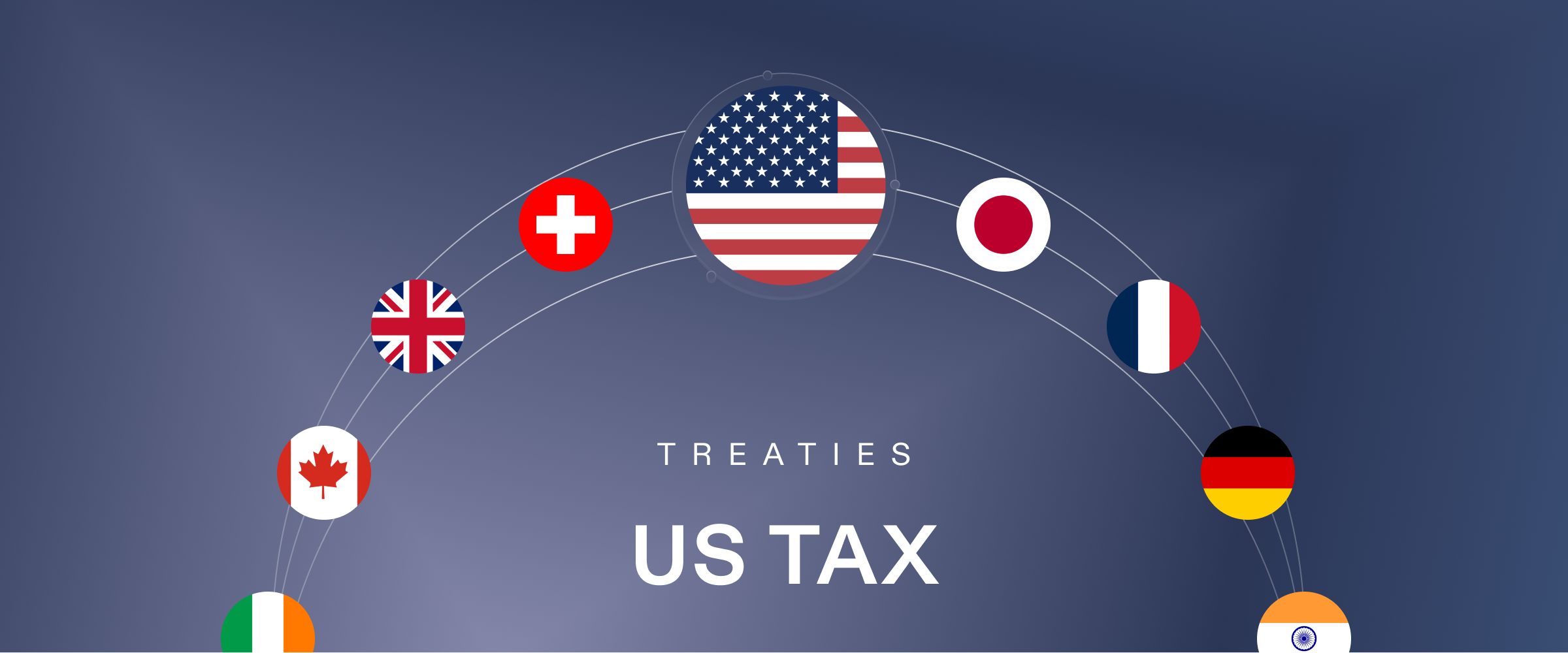

If your business sells to customers outside the United States, the US’s tax treaties could save you thousands of dollars per year.
But many finance teams don’t know these treaties exist. Or they think they only apply to income tax for individuals living abroad. But that’s not true. When your company receives payments from foreign customers or pays foreign vendors, tax treaties determine how much gets withheld at the source.
Without a treaty, you could lose 30% of a payment to withholding tax. But with the right treaty in place between two countries, that rate could drop to a minimal 5% or even zero.
This guide breaks down how businesses can take advantage of the US’s tax treaties. You'll learn which countries have agreements with the United States, how to claim treaty benefits, and what forms you need to file. Most importantly, you'll understand how to build workflows that scale as your company expands globally.
How Tax Treaties Affect Global SaaS Revenue
Tax treaties can reduce the tax burden on cross-border transactions. For companies selling software, digital services, or subscriptions internationally, this directly impacts your bottom line.
Withholding Tax on Cross-Border Payments
When a foreign company pays you, their country often takes a cut first. This is called withholding tax.
Most countries apply withholding tax on payments like royalties, software licensing fees, and service fees. Without a tax treaty, these rates typically sit around 25% to 30%. The foreign company withholds this amount and sends it to their government before you ever see the money.
US tax treaties mitigate this. These agreements between the US and foreign countries set lower withholding rates. For example, the withholding that may be 30% without a tax treaty can be reduced to 5 to 15% with a treaty. Some treaties eliminate withholding entirely. That’s money that stays in your business rather than going to a foreign tax authority.
Double Taxation Risk without Treaties
Without tax treaties, your company can pay tax on the same income twice. The first time to a foreign country through withholding, and the second time to the US on your company’s income tax return.
Let's say your company earns $100,000 from a customer in a country without a US tax treaty. That country withholds 30%, leaving you with $70,000. Then the IRS wants its share of the full $100,000 on your US income tax return. Without relief, you'd end up paying more than 50% total tax on that income.
Tax treaties solve this through two main approaches. First, reduced withholding at the source means less tax is taken upfront. Second, the foreign tax credit lets you offset taxes paid abroad against your US tax liability.
Some treaties also provide exemptions. In certain cases, specific income types are only taxable in one country, not both.
Tax Residency and the “Tie-Breaker” Rules
Companies and individuals can sometimes be considered tax residents of two countries at once. This creates confusion about which country gets to tax what income.
Tax treaties include "tie-breaker" rules that assign a single tax home. For companies, this usually means looking at where the business is effectively managed and controlled. For individuals, factors like “permanent home,” “center of vital interests,” and “habitual abode” come into play.
These rules prevent both countries from claiming full taxing rights. They also apply to individuals living abroad, which matters if your company has employees or contractors in treaty countries.
What US Tax Treaties Actually Cover
The United States has income tax treaties with about 65 countries. Each treaty covers specific income types and sets its own rules.
Types of Income Covered
Most US tax treaties address the following income categories:
- Dividends represent payments from corporations to shareholders. Treaty rates typically range from 5% to 15%, depending on ownership percentage.
- Interest covers payments on loans and other debt instruments. Many treaties reduce or eliminate withholding on interest.
- Royalties include payments for intellectual property, patents, copyrights, and software licensing. This is often the most relevant category for technology companies.
- Pensions and retirement income often receive favorable treatment, sometimes being taxable only in the country where the recipient lives.
- Employment income determines when wages are taxable and when short-term workers can avoid taxation in the host country.
- Social security benefits are covered in many treaties, preventing double taxation of retirement payments.
Each treaty also includes a "saving clause." This clause allows the United States to tax its own citizens and residents as if the treaty didn't exist. However, most treaties list exceptions, like students, teachers, and pension recipients, who can still claim treaty benefits even as US-based persons.
Country-Specific Differences
Every treaty is negotiated separately. This means rates and rules vary significantly between countries.
- Canada has one of the most comprehensive US tax treaties. It covers virtually all income types with reduced rates across the board.
- United Kingdom treaty benefits extend to dividends, interest, and royalties with favorable rates for qualifying businesses.
- India presents unique challenges. The India-US treaty has been renegotiated multiple times, and claiming benefits requires filing Form 10F in India.
- Germany offers 0% withholding on many royalty payments. This is extremely valuable for software companies.
- Australia and New Zealand both have treaties with the US, though rates differ between them.
- France, Belgium, and Switzerland each have established treaties with their own specific provisions for various income types.
Key Withholding Rates Under US Tax Treaties
Where to Access and Interpret US Tax Treaty Documents
Getting treaty information right matters. Mistakes lead to overpayments, audit flags, or denied claims.
Start with the IRS and Treasury Websites
The IRS maintains the official list of US tax treaties. The Treasury Department also publishes treaties and Technical Explanations for each treaty. These break down what each treaty entails in plain language.
These documents aren't simple rate tables. You need to read the actual treaty articles to understand eligibility requirements, limitations, and exceptions.
How to Read Treaty Provisions like a CFO
Focus on these key sections when reviewing any treaty:
- Article on Dividends tells you withholding rates based on ownership percentages. Look for phrases like "if the beneficial owner holds at least 10% of the voting shares."
- Article on Interest explains when interest is exempt or subject to reduced rates. Some treaties exempt interest paid to financial institutions.
- Article on Royalties covers software licensing, patents, and intellectual property payments. This is usually the most relevant for SaaS and other technology companies.
- Article on Personal Services determines when service fees are taxable in the source country. Look for "permanent establishment" thresholds.
- Limitation on Benefits (LOB) is critical. This anti-treaty-shopping provision determines whether your company qualifies for treaty benefits at all. Not every US company automatically qualifies.
- Saving Clause appears near the end. It lists exceptions for US persons who can still claim certain benefits despite being US taxpayers.
Mistakes that Lead to Audit Flags or Overpayments
It’s easy for finance teams to make common errors regarding treaties. These include:
- Relying on summaries instead of treaty text. Tax software and advisors sometimes simplify rates incorrectly. The actual treaty might have conditions that change everything.
- Ignoring beneficial ownership requirements. Many treaties require that the payment recipient be the "beneficial owner" of the income. Holding companies and pass-through entities can create problems here.
- Assuming state taxes are covered. They're not. California, New York, and other states may still tax the income even with a federal treaty in place. Treaties only bind the federal government.
- Skipping Form 8833. When you claim treaty benefits on your US tax return that override normal tax treatment, you must disclose this on Form 8833. Missing this form can trigger penalties and invalidate your claim.
- Not verifying the other party's residency. Treaty benefits require that both parties be residents of their respective treaty countries. You may need documentation to prove this.
Claiming US Tax Treaty Benefits the Right Way
Claiming treaty benefits requires the right paperwork. Miss a form, and you might lose the benefit entirely.
The IRS Forms You Need
- Form 8833 is the Treaty-Based Return Position Disclosure. You file this with your US income tax return whenever you take a position that the tax treaty overrides normal US tax treatment. This includes claiming exemptions, reduced rates, or special provisions.
- Form 8802 is the Application for US Residency Certification. You submit this to the IRS to request Form 6166, which proves you're a US tax resident. Foreign tax authorities often require Form 6166 before granting treaty benefits on payments going to US companies.
- Form 6166 is the certification itself. The IRS issues this after approving your Form 8802 application. Keep in mind that processing takes several weeks, so plan ahead.
W-8BEN/W-8BEN-E for Foreign Entities
When foreign vendors bill your US company, they need to claim reduced US withholding.
- Form W-8BEN is for foreign individuals. They use it to claim treaty benefits and certify their non-US status.
- Form W-8BEN-E is for foreign entities. This longer form requires information about the company's structure, treaty eligibility, and beneficial ownership.
As the US payer, you're responsible for collecting these forms from foreign vendors. Without a valid W-8 form, you must withhold at the full 30% rate and remit it to the IRS.
These forms expire after three years. It’s vital to set up a system to track expiration dates and request updated forms before they lapse.
Interplay with Tax Returns
Treaty benefits affect your US income tax return in several ways.If you've had foreign tax withheld, you can usually claim a foreign tax credit. This credit offsets your US tax liability, preventing double taxation on the same income.
Report foreign taxes paid on Form 1116 (for individuals) or through the appropriate corporate tax form. You'll need records of exactly how much was withheld and in which countries.
When you've claimed treaty benefits that reduce foreign withholding, you may have less foreign tax credit available. This is generally a good trade-off. Paying lower tax upfront is usually better than paying full tax and claiming a credit later.
Withholding Tax Tools That Make This Easier
Managing withholding tax manually across dozens of countries doesn't scale. Most growing companies eventually need automated help.
Software that Applies Treaty Rates Automatically
Several platforms help companies manage withholding tax compliance:
- PwC Navigate offers comprehensive global tax management, including treaty rate lookups and compliance workflows.
- Sovos provides withholding tax automation for payments to foreign vendors and recipients.
- RAQUEST specializes in withholding tax reclaim services for overpaid taxes on dividends and other investment income.
- Reclaimer focuses on recovering overpaid withholding taxes, particularly on cross-border dividends.
Each platform has different strengths. Some focus on compliance and documentation. Others specialize in recovering taxes you've already overpaid.
Why Static Spreadsheets Don’t Scale
Many companies start with spreadsheets to track treaty rates and compliance requirements. This works when you sell to five countries, but quickly falls apart at fifteen.
The problems with manual tracking include outdated rate information, missed form deadlines, and inconsistent application of treaty rules. One person leaves the company, and suddenly nobody knows why you're withholding 10% on payments to Germany instead of 15%.
Local advisors can help, but coordinating advice across forty different tax regimes creates its own challenges. You end up managing a network of advisors instead of managing tax compliance.
What Sphere will Offer in H2 2026
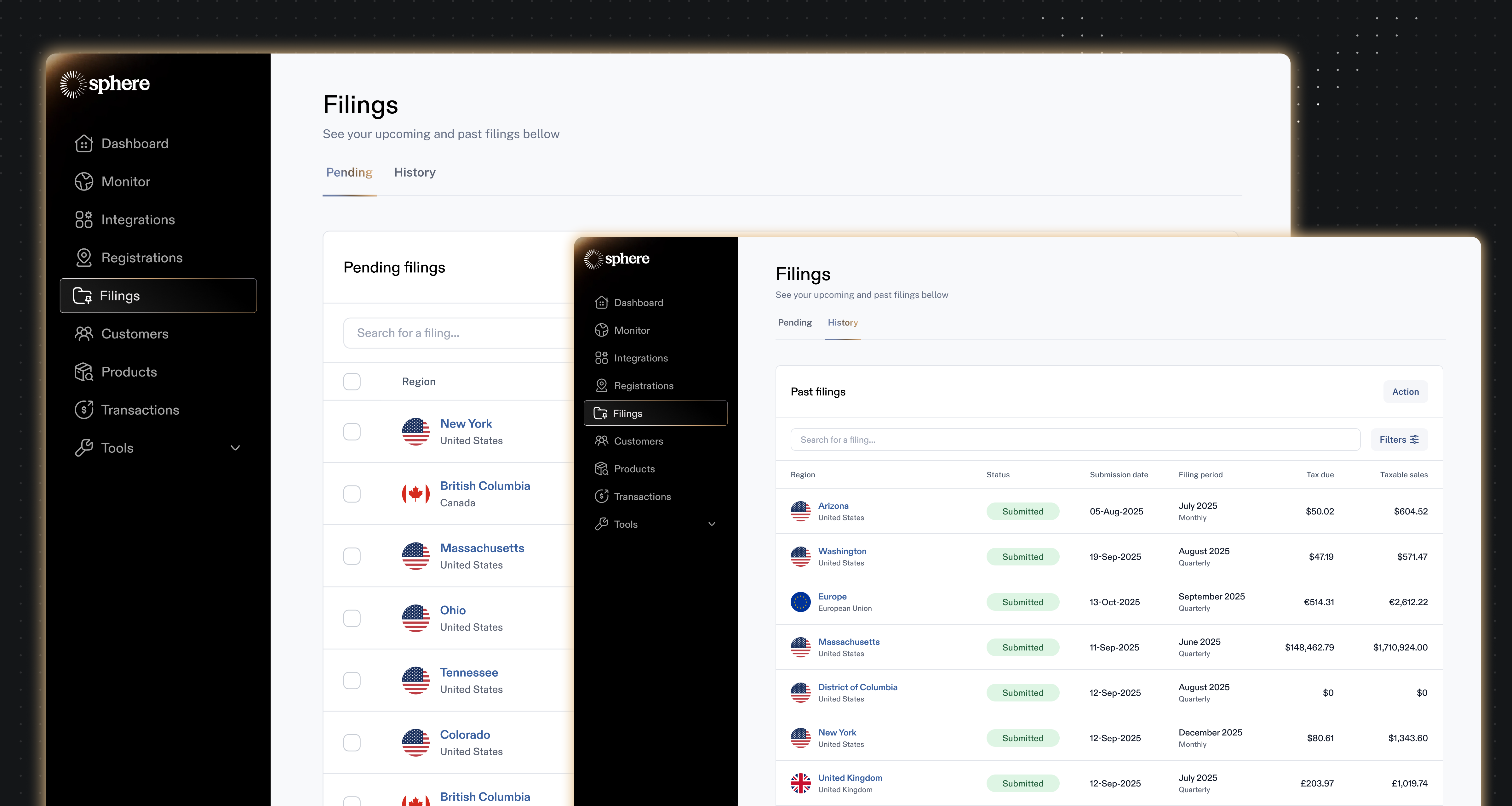
Sphere will add treaty functionality to its platform in the second half of 2026. This feature will map your product SKUs to relevant withholding rates using embedded treaty logic. This automation suggests the appropriate withholding rates based on the customer's location and the type of payment involved.
This supports both US income tax compliance and withholding relief abroad. The system will provide information on applicable treaties in each region where you sell, helping you capture savings you might otherwise miss.
Tax Treaties Are Compliance Assets, If You Use Them Right
Most CFOs don't think about tax treaties until something goes wrong. They overpay withholding for years, leaving money on the table. Or they trigger an audit by claiming benefits they weren't entitled to.
Proactive CFOs document everything, track which treaties they are relying on, and verify that customers and vendors actually qualify under treaty guidelines. They also review their positions periodically, since terms change, new treaties get signed, or old ones get renegotiated.
And as their global footprint grows, they automate where possible because manual processes break down at scale.
Tax treaties aren't just a compliance requirement. They're a tool for protecting your margins on international revenue. Used correctly, they reduce your effective tax rate and improve cash flow. Ignored, they lead to overpayments, penalties, and audit headaches.
You Might Like
.png)
.png)
.png)
Make selling globally as easy as selling locally
Join industry leaders using Sphere to streamline global compliance processes.


